Showing posts with label individuation. Show all posts

Thursday, December 2, 2010

Translating Emotions Into Images

"To the extent that I managed to translate the emotions into images - that is to say, to find the images which were concealed in the emotions - I was inwardly calmed and reassured.  Had I left those images hidden in the emotions, I might have been torn to pieces by them.  There is a chance that I might have succeeded in splitting them off, but in that case I would inexorably have fallen into a neurosis and so been ultimately destroyed by them anyhow." (Jung, Memories, Dreams. Reflections, p. 177)

Powerful words by Jung near the end of his life.  Images allow me to get out of my head and into those aspects of self I have otherwise bolted behind solid walls.  I know that I am often seen as "cold" and "distant" by others.  My penchant for wanting the facts, for looking at the evidence before me makes others feel uncomfortable.  I often hear, "Show some emotion, for Christ's sake!"  Unfortunately, these words don't seem to make a dent in my dispassionate way of being.

It was only through images, be the images contained in music, art or photographs, that I came alive.  The magic lies within myself and not in the music or the images or the materials.  The camera, the brushes, the guitar are simply tools in which I have allowed my hidden self to emerge.  Without these tools and the permission, I would have self-destructed.  The images that emerged, were voices and images of my repressed emotions.  They needed release or else, like a bomb, they would have exploded with lethal force with no thought to the damage that would have been wrought on others, especially those closest to me.  And so it remains even now, Via images, I continue to flow with life.

Wednesday, December 1, 2010

The Capacity to Ask Why

This photo was taken almost two weeks ago.  It has been sitting on my desktop waiting patiently for me to finally place it here on the blog site.  To tell the truth, when I took the photo, I took it expressly for the purpose of using it here and so placed it on the desktop.  Then, I ignored it as if it wasn't even there.  Well, like all things that get shoved into the background, it eventually finds a way of making its presence felt with a demand to be brought into the light of day, into consciousness.  So, here it is.

So, what does this image mean?  Why this image?  Why did I even take it?  Obviously, something about Chinese architecture must be at play, something about an opening in a solid wall that is neither a door nor a window.  The wall is not within so both sides of the wall are "outside.  The wall isn't even a barrier as one can easily go past the wall as if it wasn't even there.
"The nature of the mythic sensibility is found most in our curiosity, our capacity to ask "why"? and "what does this mean"? and "how do I respond"?  (Hollis, Mythologems, p. 23)
So that is why, mythic sensibility is active.  This curiosity isn't the same curiosity one uses in search of solutions to math equations or for technical problems.  Rather, this is the original curiosity that one sees in a child that views the world with awe and with not just a little fear of the unknown.

Tuesday, November 30, 2010

Mythic Sensibility

This was the scene outside of my apartment window this morning.  The sun did rise though the air was murky.  Some days, this is the best it gets.  The promise of sunshine that quickly gets gobbled up by the elements leaving one in a gray world.

At moments like this, one wants to retreat from the world and lose oneself.  Should it be playing a mindless game against a computer or should it be facing up to the task of navigating through the smog of life, taking on the responsibility of doing rather than being absent?
"The flight from suffering, from consciousness, from personal responsibility in the face of the immensity of the space we traverse, is understandable; we are all familiar with it.  But when we examine the course our life demands, our own nature demands, we commit ourselves to it, then we are obeying the will of the gods, truly.  Such obedience may bring little comfort or security, but it will bring a larger life." (Hollis, Mythologems, pp21-22)
Yes, at times I want to escape it all, blame others for everything, have others be responsible for everything.  Sometimes it is just too heavy.  And at times, I just say the hell with it and abdicate all responsibility and do as little as I can get away with for a while.  But then, something pulls me back into presence, into doing my part, into being responsible, at least for myself and my small space of the whole.  At these times, it isn't as though I have much of a choice, not if I am still to remain a man, a sane man.

Saturday, November 27, 2010

Myth as Tribal Value System

"Cultures as well as individuals live in service to values, not simply values that are conscious and rationally apprehended, but values which operate unconsciously as well."  (Hollis, Mythologems, p. 11)
 Today's photo was taken at the YanCheng Safari park here in Changzhou.  I had already chosen the topic for the day and was in search of a photo to "fit."  I had o  riginally thought to use a group photo of one of my classes that I took yesterday, but opted for this photo as soon as it scrolled past my eyes.  The image does evoke tribe, it does evoke instinct as well as awareness.  And whether or not one sits alone or with others, one is part of a tribe - contained.

I commented yesterday about being the "lone wolf" as part of my personal myth.  I have no doubt that I also must include a thread of being part of a tribe,  Living in China is proof to me that I operate both consciously and unconsciously on a tribal level.  Each day is confusing in its own way, a good confusing to tell the truth.  As I walk the streets, it appears as though much that happens in front of my eyes is chaotic and that all have lost "common sense."  I don't understand how there aren't a hundred traffic accidents a day in front of my apartment building.  That, forces me to look at "common sense" or at how I define common sense.  Everything I take for granted about community is based on my home culture.

Of course, this is worrying for me.  What values do I bring with me as I interact with my Chinese hosts?  I consciously work hard to be a good visitor, one that respects the host community.  But, I "know" that I still act out of unconscious values as much as I act consciously.  Being in a foreign environment becomes even more of a blessing as when I act unconsciously.  It becomes hard to pin it on others and forces me to own and to weigh the unconscious tribal value that got acted out.

I learned a long time ago that when one is a teacher, one doesn't really teach a course, or teach students; one teaches one's self to others while thinking one is teaching Math or History or whatever, to a group of students.

Wednesday, November 24, 2010

Tension Between Meaninglessness and Meaningfulness

These two birds that I came across in the YanCheng Safari Park looked a bit bedraggled from their journey together.  They remind me a lot of my experience of China so far.  Looking at them, I see how couples here cling together for survival, carving out a small space simply in order to continue the process of life.  They don't know the "why" for their life.  All they know is that they live and that they will do their part for the continuation of life to follow - all practical stuff, instinctual stuff.

This instinctual stuff that lies within our unconscious is not only invested in life, it is invested in death.  As Hollis puts it,
"We hunger for meaning, for God, for love, for connection.  Simultaneously we hurtle toward extinction in seeking sleep, death, the arms of the beloved - all through the great darkness in which we walk."  (Hollis, Mythologems, p. 8)
This is heavy stuff.  As I read these words, I heard echoes in myself and I also wondered about how this plays out on the collective level.  Almost as soon as I wondered, I knew that there is no difference between the individual and the collective.

I know as an individual I want my life to have meaning.  Without meaning, for me, life is pointless.  If there was no meaning other than to be born, to reproduce and then fertilize the earth with my body, then there is no point in being good, in producing art, in music and song.  On the collective level, it seems that all cultures invest in life having meaning.  The rise of religions, the founding of universities, the protection of the arts through wars and all manner of catastrophes speak loudly of the knowledge at an unconscious level that there is meaning.

Yet for all of this desire for meaning, I spend much, if not most of my life in meaningless activity.  I simply fill hours in the day.  It is as though I resist as much as I am pulled to meaningfulness.

Tuesday, November 23, 2010

Journey of Soul

At the north end of YanCheng, in the southern part of Changzhou, a series of three open arches alert one to the fact that one is about to enter a different world, perhaps a different time.  I have yet to enter into this area of YanCheng as I am saving it for a Friday or Saturday in the not too distant future when sunlight promises good photography conditions.

Perhaps that is not the only reason that I delay the trip to the inner world of YanCheng.  I will only know when I finally make this journey.  If the open arches have any relation to the the journey, it will be one that is challenging, psychologically.  When is one ever ready for the next stage?  Always there is a fear of the creatures one will find that threaten the world as one knows it.  What will result from meeting these demons of the inner world?  How will I change?  Will the change disrupt my life as I know it, the patterns that have now become comfortable?

Perhaps that is the key - life has become comfortable.  I have been resting and gathering strength and courage for the next stage of the journey.  The words of Hollis find resonance within me:
"Clearly, we live in a culture of great spiritual impoverishment: addictive materialism makes us slaves to surfaces; fundamentalist clamor makes us fearful and anxious; and distracting, banal ideologies diminish rather than enlarge the journey of the soul." (Hollis, Mythologems, p. 8)
Ouch! Banality is where I have been finding myself lately.  In between teaching and preparing lessons, I fill in as many of the spaces playing cards against the computer with little ambition to do much more than that.  I have been thinking of buying another guitar and investing time with a return to playing music.  Why?  Perhaps as a diversion, as a way to fill in time and avoid doing some real work.  I am not sure.  And because of this, I sit and wait, holding the tension of waiting, for the pull back into the journey of soul.

Tuesday, November 16, 2010

Relocating Around a Firewall

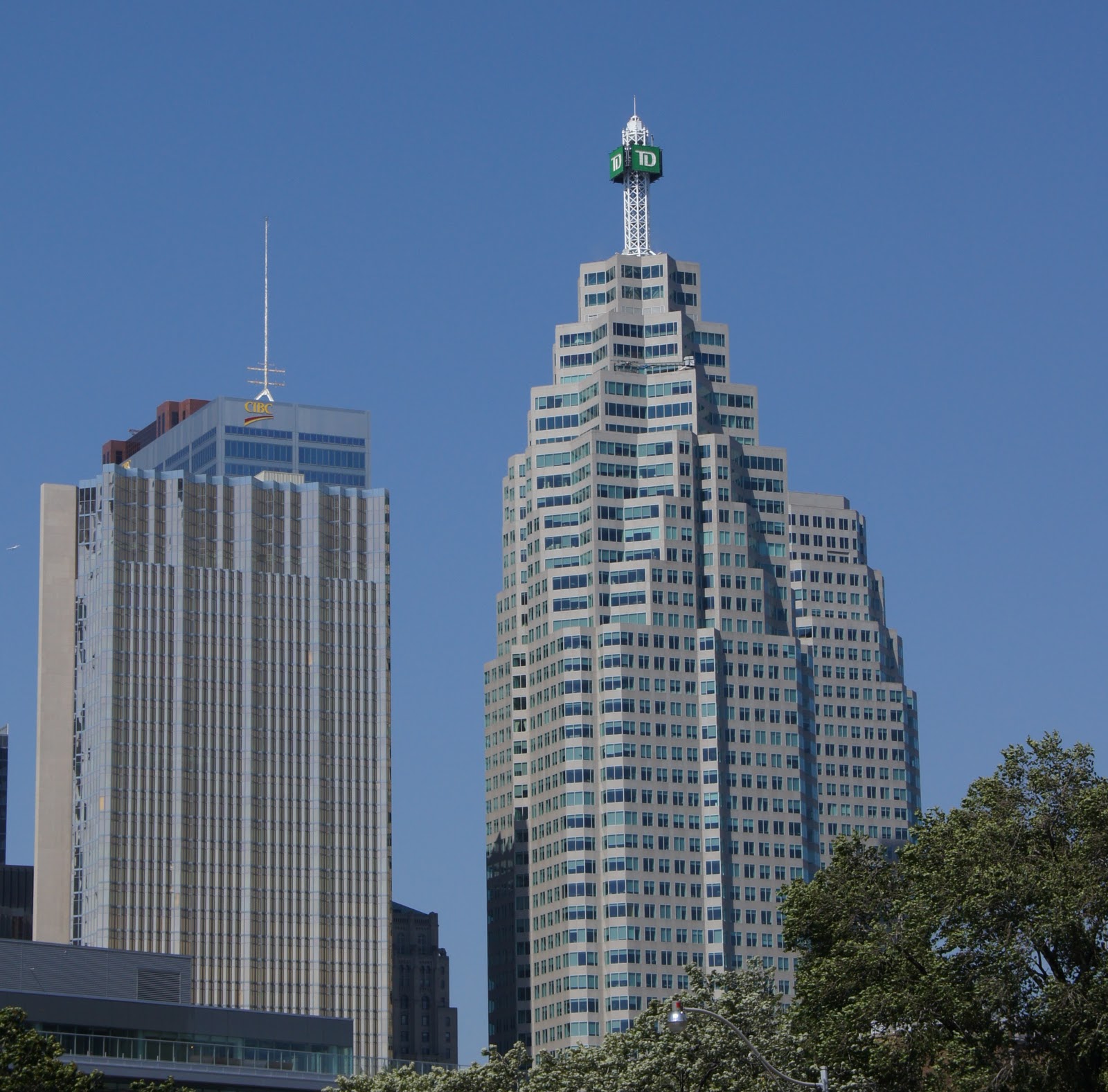
Toronto, Ontario Skyline, August 2010
The problems with the Wordpress™ service in China has forced me to find a different host for the blog series that I have maintained for the past two years.  I hope my readers will follow me here and bare with me until such time as I either return to the Wordpress™ site or establish my own domain name site.  With that said, I want to continue on with the posts.

Today’s photo was taken in Toronto in late August just the day before I boarded the plane for China.  This is the modern version of a cathedral for the religion of commerce in the service of the god, Mammon.  Mammon as a god, is a god outside of the human psyche, a god located in power, in money, in things, in stuff.  The route to this god is in pursuit of money and power, and the worship of money and power.  And, like any other "religion," it can only lead to an emptiness, a realisation that one's individual humanity and spirit has been betrayed and one has lost all meaning.
"What one could almost call a systematic blindness is simply the effect of the prejudice that God is outside of man."  (Jung, Psychology and Religion, par. 100)
Somehow, as I struggle with meaning, for my own "raison d'être," I find myself shedding stuff, needing less.  Perhaps it is simply more about aging than about individuation and I delude myself into thinking that becoming more conscious leaves one less "needful" of the stuff of Mammon.  Perhaps . . .